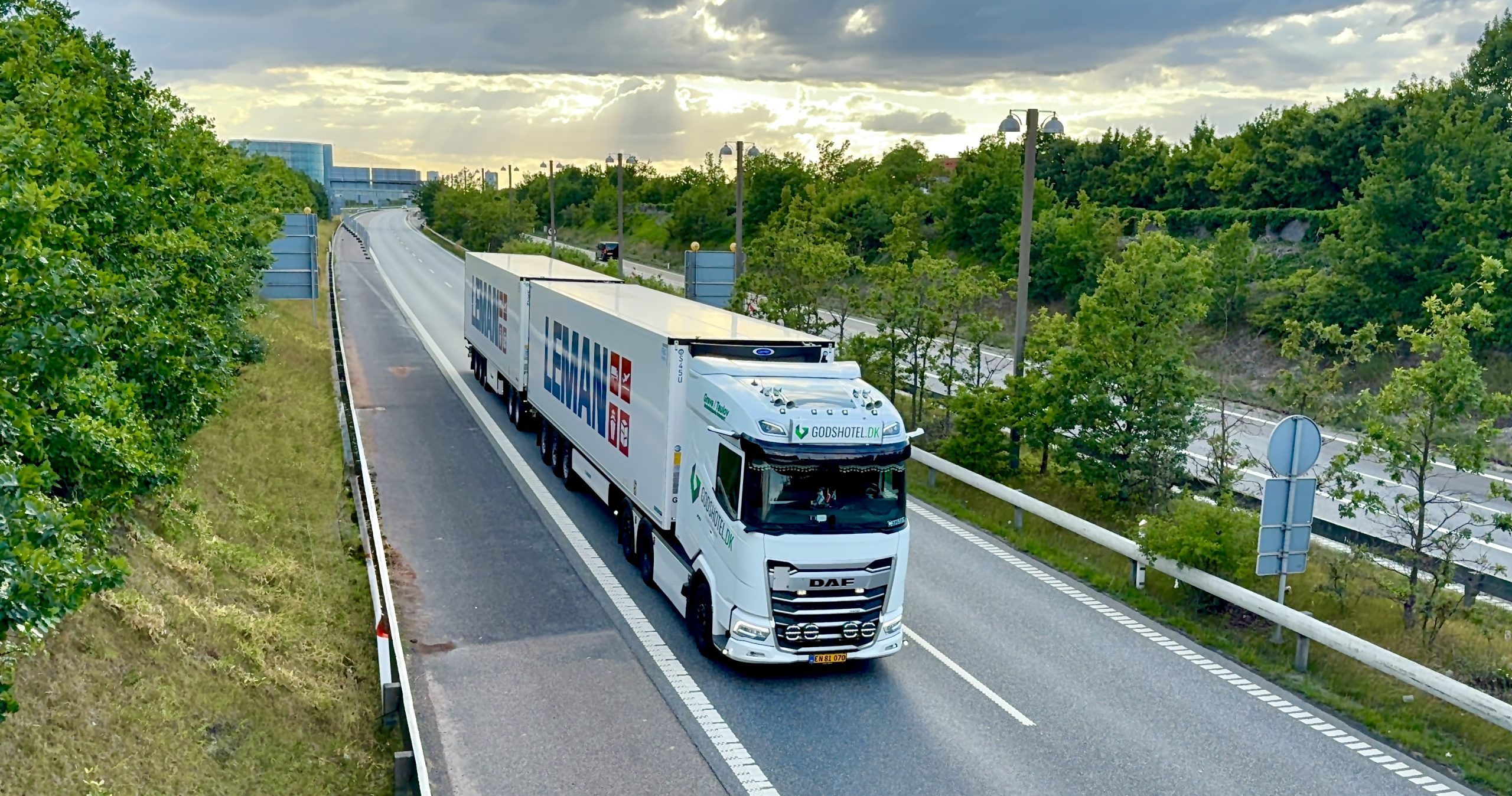
Did you know that selected pharma transports can move significantly more cargo with fewer vehicle movements – while also reducing fuel use and emissions?
For suitable high-volume routes, LEMAN uses EMS/DUO2 double-trailer combinations, where one tractor unit pulls two trailers. The setup can carry up to 132 pallets, making it particularly relevant for pharmaceutical cargo, where volume is often a greater constraint than weight.
More capacity, fewer vehicle movements
The idea is simple: instead of using two conventional tractor-trailer combinations, the same transport volume can in some cases be moved by one tractor unit pulling two trailers.
That means fewer tractor units are needed to move the same amount of cargo. And while a double-trailer combination uses more fuel per kilometer than a single conventional truck, the reduction in total vehicle movements can lower both fuel consumption and CO₂ emissions per transported pallet.
For pharma customers with large and stable volumes, this can provide a useful combination of increased capacity, more efficient transport planning and lower environmental impact.
Already in use on pharma flows
LEMAN already uses the setup on suitable high-volume lanes. One example is pharma traffic through Scandinavia to Finland, where both the volumes and road infrastructure make the combination a good fit.
The environmental benefit will always depend on factors such as route, load factor and operating conditions. On a representative Finland route, data from LEMAN’s trucking partner indicates a reduction in fuel-related CO₂ emissions of around 28–29% compared with moving the same volume using two conventional tractor-trailer combinations.
Lower emissions – with the right conditions
That result is broadly consistent with an independently monitored European field trial, which measured a 27.6% reduction in diesel consumption and CO₂ emissions using a comparable double-trailer setup. Academic studies also point to emission savings, although the size of the reduction varies depending on operating conditions.
EMS/DUO2 combinations can only operate on approved road networks, so the solution is relevant only where regulations and infrastructure allow it.
Where the conditions are right, it is a practical way to move more pharma cargo with fewer vehicle movements – and a lower environmental impact.
Fuel consumption figures are based on data from LEMAN’s trucking partner on a representative Finland route. The 27.6% reduction referenced above comes from the VDA EcoDuo pilot project, scientifically monitored by TÜV Rheinland. Academic studies of comparable vehicle combinations point in the same direction.