For Jørn Peter Hansen, Director Logistics & Distribution at LEMAN Denmark, sustainability does not only belong in reports, strategies or long-term ambitions. It is also part of daily operations.
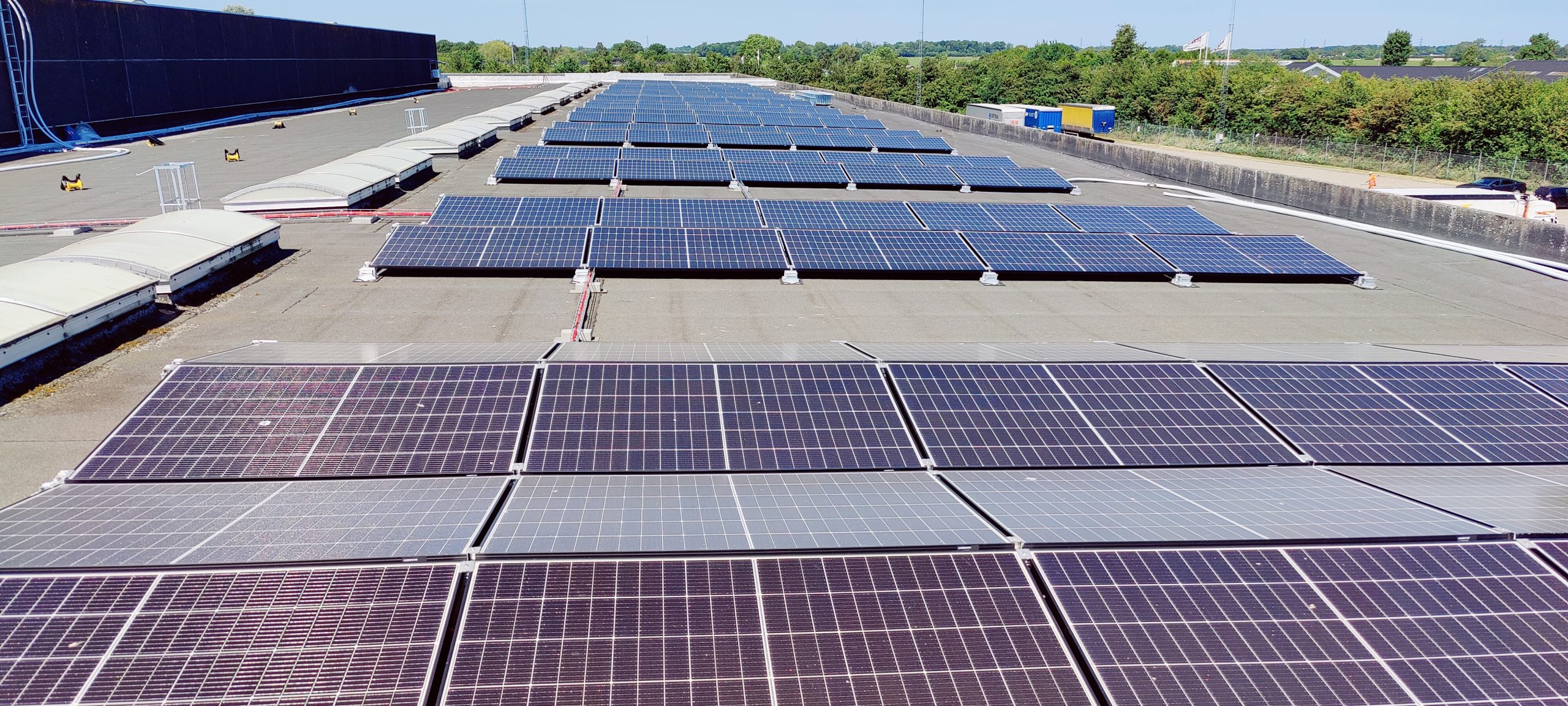
At LEMAN’s headquarters and warehouse facilities in Greve, one of the Greater Copenhagen area’s largest roof-based solar systems has been producing green electricity since 2023. For Jørn Peter Hansen, the system is a practical example of how sustainability can be connected to the way we run our facilities every day.
“Strong logistics is built on daily decisions. The same is true for sustainability. It has to work in practice, close to the operation and close to the people who run it every day,” says Jørn Peter Hansen.
A large roof with a practical purpose
The solar system covers around 4,000 square metres across the roof of our headquarters and warehouse facilities in Greve. When the project was launched, it was among the largest roof-based solar installations in the Greater Copenhagen area.
A new internal report shows that in 2025, the facility produced 712,184 kWh of green electricity. Of this, 44 percent was used directly in our own operations, while the remaining electricity was supplied back to the public grid.
Practical improvements add up
In total, LEMAN’s facilities in Greve consumed 887,264 kWh during 2025. The remaining electricity needed for operations was purchased from the grid as certified green electricity.
The solar system in Greve is part of LEMAN’s broader work to reduce the climate impact of our operations through practical improvements and long-term investments. Similar initiatives have also been introduced in other locations.
For Jørn Peter Hansen, the point is not to claim that one solar system solves everything.
“Warehousing is about flow, structure and reliability. If we can make the buildings we operate from more efficient and responsible, that is a positive step. Practical improvements add up over time,” he says.
Small steps in daily operations
Across our warehouse operations, this also includes smaller everyday improvements, such as optimising lighting and equipment usage, so energy is only used where and when it is needed.
The same applies to waste. In daily operations, we focus on better waste sorting, increased recycling and more efficient use of packaging materials.
None of these initiatives changes everything on its own. Logistics will continue to require energy, infrastructure and transport. But practical improvements in daily operations can still contribute over time.